
About Me

"Hey Tiny." "Hey Biggs." "Are you my buddy?" "Yep, I'll always be your buddy."... We're just two fisch in a big sea, created by a big God, taking on life together.

Tuesday, October 7, 2008

Social Movements and Organizations


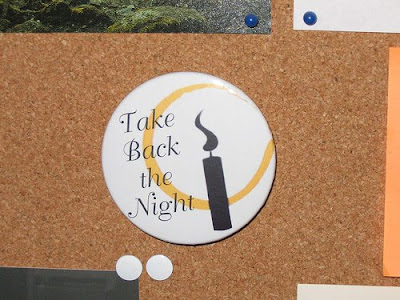
Social movements and organizations give life to and encourage one another in numerous ways. Della Porta and Diani talk about this phenomenon in chapter 6 of their textbook, Social Movements. They say that as for the role of organizations, they act as sources of identities for movements and often have people join because they want to be apart of that particular movement. Organizations also act as a recruiting ground for movements, because when people decide to join or support an organization, they are often later motivated to participate in the movement because they are already involved in the organization. Della Porta and Diani also say that organizations keep movements alive during down times when the movements are inactive. Looking at the organization Take Back the Night, you see examples of the interaction between organizations and social movements. TBTN attracts many women who have been attacked or assaulted sexually, and those who have been affected some how by violent sexual acts. It gives women the power to feel as though they can do something in retaliation for the injustice that was done, and to fight to prevent similar incidences from occurring again. Women and men who are involved in the TBTN organization are often motivated to join the TBTN movements such as empowerment marches, candlelight vigils, and survivor speak outs. As Della Porta and Diani say, being a member of the organization often recruits these members to join the movements, because if they see fellow members getting involved in the action, then they think they should be too.

Della Porta and Diani say that movements also influence organizations. One of the ways in which this happens, is that movements will draw attention to related organizations when they get a response from the media and public. For example, I never knew there was a group called Take Back the Night until I heard about the empowerment march on campus that took place. It got coverage in The Breeze and was seen on flyers all over the commons. This event brought much attention to the actual group that fights to end sexual abuse, violence and rape. When a movement takes place where the organization isn’t present, the important issues discussed at the movement will still be significant to the organization. At survivor speak outs for TBTN, even if not all the members from the organization are present, the issues addressed at the movement still largely affect and promote what the TBTN organization stands for as a whole. Lastly, Della Porta and Diani say that the symbols of social movements can become symbols of a particular organization. When a burning candle is advertised with an announcement of a TBTN movement, it is a symbol that can often be associated with the organization as whole.

Della Porta and Diani also talk about two general types of organizations. The first one is called mass protest organization, where the actual events are the goal of the group, a long with the desire to draw attention to particular issues. The second one is called grass roots organizations. This type is longer lasting because it believes it’s’ cause is always on going and it is more concerned with social change and recruiting people into movements. Take Back the Night would fall into the grass root category because it continually strives to bring awareness to the public and to gain more members to increase their effectiveness. TBTN is just one example of the many ways that social movements and organizations largely give life to one another.
Monday, October 6, 2008

Social Movement Networks

In Della Porta and Diani's book, Social Movements, they discuss in chapter five, social movement networks and why it is that people get involved, or pulled in to participate. They say that a big reason why people get involved in social movements is because of self-realization, or the matching of who you are with who you want to be. When people can visualize who it is that they want to become, it often makes them feel better about themselves if they get involved with an organization or movement that helps them work towards becoming who it is they are trying to be. As human beings, we are largely driven by our emotions and how we view ourselves. If there is something that makes us happy, we naturally go after that to increase our sense of self-worth and satisfaction. So if there is a movement that fights for a cause we believe in, or feel we should believe in, we are more likely to join out of a personal sense of obligation. This personal sense of obligation is usually a powerful driving force because if we do not join the network, we can easily feel guilty and feel bad about ourselves because it might appear as if we do not care about anything. So in a world where people are constantly trying to make themselves appealing to other people, being a part of a larger social movement enhances their self-worth and self-confidence because they feel as though they are doing something meaningful with their lives. This makes complete sense to me, because looking at my own life, I see how the things I am apart of, I join because it gives me a better sense of self-worth and I feel as though I am doing something important with my life. Della Porta and Diani say that social movements take advantage of this drive within people to feel worthy, and they work to make their network seem appealing and attractive to people looking to invest in a cause they believe in. Networks give people a sense of identity, and who doesn’t want to seek and understand their identity?

Diani and Della Porta say there are two types of networks that pull you into them. The first is exclusive networks. These are networks that take on a cult-like nature and are often religious. They are they only networks you are involved in because it becomes all you do. These are often extreme groups that involve brain washing and convincing people that their way is the only right way. When I think of exclusive networks, I often think of the KKK. People involved in the KKK were so set in their beliefs that black people were less human than them and undeserving of life, that they would do almost anything to keep blacks away. They convinced themselves that the violence they resorted to, and the things they would say were completed justified and right. They felt as though their beliefs against blacks were so important and worthy of defending, that they needed to join the network and devote much of their lives to fighting for this cause. It made them feel better knowing they were fighting for white supremacy, rather than sitting back and doing nothing. So the KKK got their members from like-minded people who felt a sense of personal obligation to join.

The second type of network is multi-organizational networks. These are networks that are linked to many other similar networks where the members are often involved in several. People who are involved in multi-organizational networks often switch from one to the other during latent periods within a particular movement. These types of movements also largely contribute to self-realization because people feel as though they have much importance when they are involved in several movements, fighting for several causes. In my life, I see this play out in the many religious networks I am involved in. The different networks are not partnered with one another, but they promote the same beliefs and work to glorify the same God. I am able to be apart of several different groups, and feel as though I am having more importance in my life as I come in contact with different people. Della Porta and Diani would say that this is how multi-organizational networks live and continue to grow, as people like me find their self-realization through them.

Tuesday, September 23, 2008

Harlan Country, USA in relation to Rose and Thomas, Walker, and Zelditch

Harlan Country, USA is a movie set in Kentucky in 1973. It centers on the working-class coal miner men of Harlan who go on strike to fight for better working conditions and pay. Naturally, they come up against much opposition, and learn that their fight for rights will be much more complicated than they anticipated.

In Fred Rose’s article, Toward a Class-Cultural Theory of Social Movements: Reinterpreting New Social Movements, he says that it is distinct class cultures that characterize social movements. Working-class movements will be shaped by the elements of their social class, rather than a particular political stance or a set of beliefs. He says that working-class movements are generally a direct outgrowth of the struggles and oppression felt from other classes, and therefore work to eliminate those struggles and produce immediate change. Middle-class movements, Rose says, tend to pursue universal goals through education and experiences learned from middle-class values, focused more on personal skills and communication. The miners in the movie were men from a struggling working-class who were tired of the lack of good treatment and respect from those in charge. Not only were their working conditions dangerous to their health and protection, but they were paid poorly and would not be able to retire till they were so old that they were already near death. Due to these injustices, a handful of men came together to go on strike and began the process of convincing others to do so as well. Just as Rose said, their initial reasons for coming together and creating a social movement came from their similarities brought about by class, rather than politics or specific values.

In Thomas, Walker, and Zelditch’s article, Legitimacy and Collective Action, they studied the likelihood of people to follow rules vs. getting together as a collective group and break the rules in order to bring about change. They found that “when change is legitimate, mobilizing collective action to correct inequity becomes a routine aspect of ongoing activity; however, when the social organization is legitimated so that change would damage collective purpose, participants behaviorally support the order by not even suggesting change in the social organization – even though it generates what is collectively defined as inequity to their disadvantage.” Several workers in the movie were reluctant to join the strike and union because it went against the rules and the norms. However, the majority of men (and their wives) saw that it was a “legitimate” cause to fight for change for. To them, once a few men had initiated collective action, it was easy to join in together and break the rules in hopes of bringing about a beneficial, positive change.

Thursday, September 18, 2008

Collective Action and Identity

Reflecting on last week's posting, I realized a connection between Ms. Norma McCorvey, or Jane Roe, and the use of identity as a form of motivation, talked about in Della Porta and Diani's 4th chapter in the textbook, Social Movements: an Introduction. Della Porta and Diani say that in in order for people to be moved to join a social movement, they need to feel as though they are a part of that movement. Individuals must somehow see themselves as part of a specific collection and feel as though they are tied to the other members. The book points out that this can be a difficult process sometimes, due to the fact that identity is highly a dynamic process. Throughout our life, many things about us change, including our beliefs, our values, our outlook on life, our relationships, and our careers, to name a few. Granted, some aspects of our identity remain static: our biological gender, our height, the family we were born into, etc. Yet with dynamic identities, social movements must work extra hard to learn ways to use changing beliefs and values to their advantage, to get others to join their movement.

Looking at Norma McCorvey's influence in the abortion debate is a perfect example of this. McCorvey was once in her life a believer in the right for women to choose if they will abort their baby or not. She was a public figure for the pro-choice movement and helped bring about their victory. Later in her life, however, she had a transformation that changed the way she felt about abortion. Her identity drastically changed and she soon began fighing for the "other side"; the pro-life movement. This movement greatly benefits from McCorvey's dynamic identity because she has a story that can be shared with others to motivate them, or meet them where they are. Many people who support pro-life movements have gone through abortions themselves and now live with the pain and guilt that can be understood by spokespersons such as McCorvey. The pro-life social movement can use McCorvey to connect with others in their group, and especially those outside the group, who can relate to her and be influenced by her convergence. If people who are on the fence with their beleifs in abortion hear McCorvey's personal story that cannot be argued with, they might possibly be swayed to join the pro-life group. McCorvey also has the ability to help clearly define the boundaries between the pro-choice movement and the pro-life movement. Della Porta and Diani say this is an improtant phase in the identity construction process. Women who have had abortions and who are hurting emotionally and/or physically may deeply connect and empathize with McCorvey's story, and feel as though they are one of her and be motivated to join her in the fight against abortion. If they feel as though they are not alone and do not have to be shamed by their past, they may be greatly moved to step out and share their story as well. For the pro-life social movement, Norma McCorvey's transformation was a huge sucess. The movement is now able to apeal to those who can identify with her, and can gain participation by those who feel they are apart of McCorvey's story. Della Porta and Diani were right when saying that collective identity leads to motivated action.

Wednesday, September 10, 2008

Linders Article Reflection


I found Linder's article, Victory and Beyond: A Historical Comparative Analysis of the Outcomes of the Abortion Movements in Sweden and the United States, to be very interesting in that it points out the differences that can occur in the results of the same type of social movements that happen in different countries. This article examined the outcomes of social movements in the US and in Sweden that legalized abortion, and how the aftermath has taken on a seperate story in each country. As we learned in class, the social movement in Sweden had its change come about from the top-down. A committee was formed that studied abortion and was able to convience the federal courts that abortion should be legalized. The news then spread to the people of Sweden, and counter movements had less time to fight back before the decision was made. In the United States, pro-choice movements had to force their change from the bottom-up. People had to work their way through lower courts until eventually Roe vs. Wade made its way to the federale courts. Because the process that the U.S. pro-choice-ers had to go through took slow, steady work to make its way up, counter movents had time to anticipate this change and fight back. Once the government legalized abortion, many states still made it extremely difficult for women to actually get abortions; largely due to the work of pro-life movements.

By looking at the process that legalized abortion has gone through in the U.S., I think it is a very strong example of how "bottom-up" change can be a lot more challenging and time consuming for the supporting movement. When the famous Roe vs. Wade case made its way through the courts many years ago, pro-choice supporters saw an immense victory before their eyes. But was it a complete victory? To many pro-choice people, they would answer with a definite "yes." Still, the legalization process had just begun, and the battles were still about to be fought. Looking at strict abortion laws across our nation today, we can see that the war is not over yet. Due to the slow process of bringing abortion rights to the federal court, pro-lifers have been working just as hard. If those from the pro-choice social movements in Sweden were to come to America and observe the differences in our government's attitiude towards abortion compared to theirs, they would most likely be astonished. Yet the source of where their change came from can not be ignored. Their top-down strategy made all the difference in their fight.

Today, Ms. Norma McCorvey, also once known as Jane Roe, is fighting to undo the changes she helped bring about 1973. Her life took a drastic turn in 1995 when she gave her life to the Lord and had a revival in her soul. Her view on abortion changed, and she committed her life to spreading the word of the pain that abortion brings about. Many people might say that the fight to make abortion in the U.S. illegal looks impossible. Yet that is what many people once said when pro-choice groups marched in protest to legalize abortion. Nothing is impossible, we should have well learned. Time, however, will be the key variable in the fight to take back the case of 1973. Just as Jane Roe had to work from the bottom-up to legalize abortion, she must work from the bottom-up to slowly change the minds and hearts of those who hold the power to undo what she once did.